Verified identity
IRS records reviewed August 30, 2026 identify Blaine County EMS Outreach in Hailey, Idaho as a 501(c)(3) public charity. The broad NTEE E62 taxonomy does not prove ambulance, dispatch, 24-hour, or clinical operations.
01 A quiet signal before urgency
Readiness can begin in an ordinary minute: notice one visible cue, shape one concise line, and choose one practical move that makes the next step easier.
The Clear Minute is a proposed offline practice studio created in the public context of Blaine County EMS Outreach. Its lessons are app-authored general education—not an official emergency service, dispatch tool, clinical protocol, diagnosis, or treatment guide.

02 The household table
Every fictional practice follows the same calm rhythm, so the habit matters more than a perfect answer.
Mark a fictional unit Practiced or Revisit. There is no public profile, score, streak, diagnosis, or competitive ranking.

03 Find me here
A clear location line can begin with the simplest reliable anchors: the place, the approach, and one feature that distinguishes it.
Use fictional scenes to rehearse an address or landmark, a turnoff, an entrance, a floor, or a nearby feature. The exercise rewards what can be observed; it does not reward confident guesses.
Mountain View campground, north loop, beside the timber shelter. The entrance is from the east road.
The app is designed without a field for entering or storing your real address, live position, contacts, or medical details.


04 Call with clarity
Practice a compact opening line, then listen. A real call is guided by the call-taker—not by a prewritten script in this product.
911.gov guidance says call-takers commonly need the emergency location, callback number, nature of the emergency, and details. Answer questions, follow instructions, and stay on the line until told otherwise.
Text-to-911 availability varies, and a voice call is best when possible. The fictional examples here never promise local availability, response times, or a particular dispatch process.
05 Make access easy
Small, safe preparations can reduce confusion without putting anyone in the way.
These are general readiness prompts. They do not describe an official Blaine County EMS Outreach procedure or guarantee that a particular approach is safe in every situation.

06 Build the pocket kit
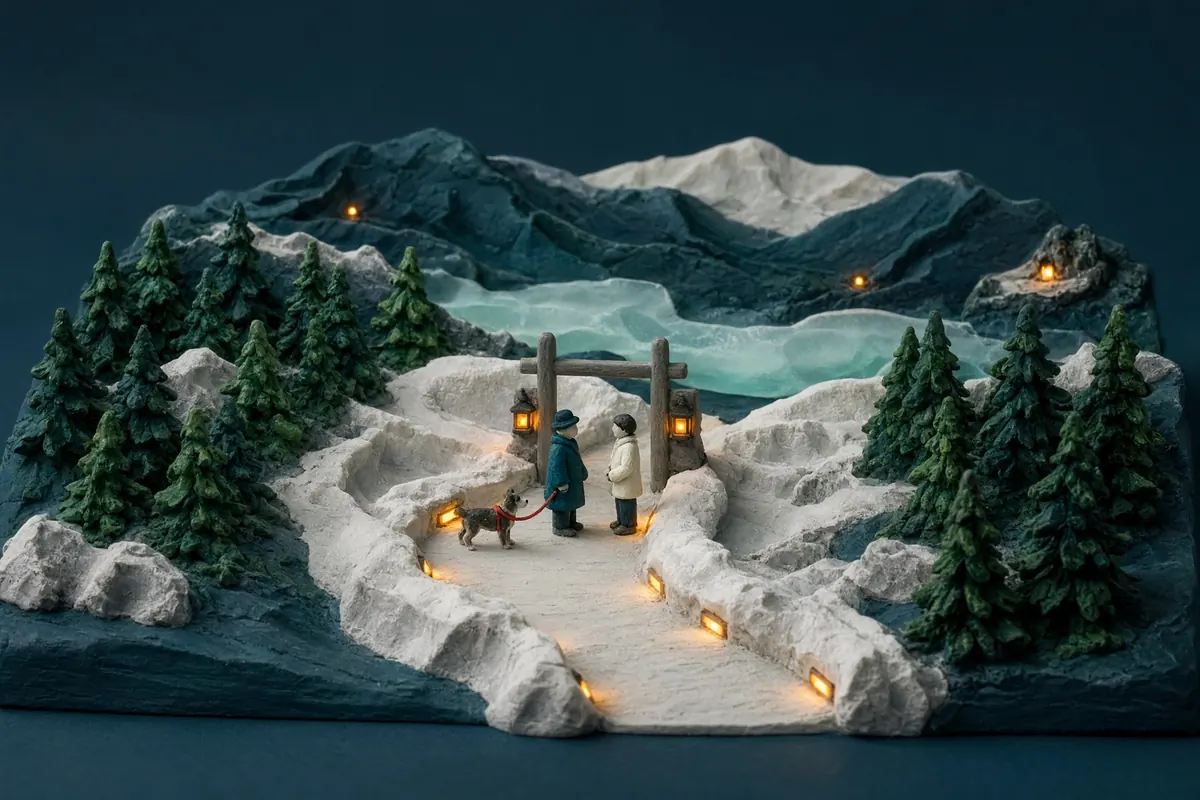
A useful kit reflects the household, the place, the season, and trusted official guidance.
The practice explores broad, unbranded categories: water and shelf-stable food; light and backup power; a weather radio; basic first-aid supplies; masks and sanitation; warmth; a paper map; and a whistle or simple tool.
Ready.gov recommends a household communication plan and a basic supply kit adapted to household needs. The Clear Minute does not endorse products, specify medical supplies for an individual, or replace local guidance.
07 Plan for every body
The person affected should lead the plan wherever possible. Ask, listen, and prepare backups around real preferences.
Practice can consider mobility, communication modes, sensory load, assistive-device power, service animals, transportation, temperature-sensitive supplies, trusted support networks, children, and older neighbors—without turning a person into a checklist.
Ready.gov disability-preparedness guidance includes communication, transportation, assistive-device power, and service-animal planning. The app keeps those ideas general and asks for no health or disability data.
08 Support without crowding
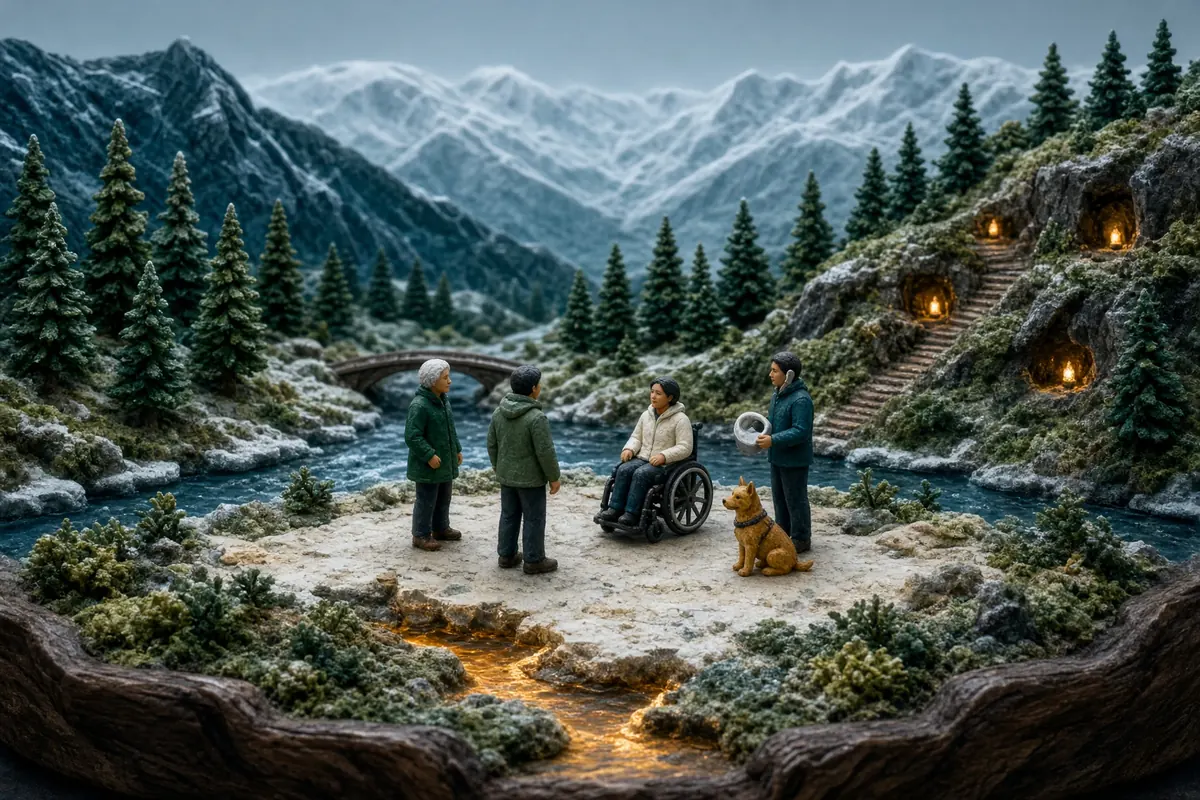
Respectful non-clinical support is often quiet: clarify a role, retrieve something when asked, keep a path open, and make a concise handoff.
Fictional scenes rehearse checking for visible hazards, asking before helping, contacting emergency services, following instructions, staying present, and leaving treatment to trained guidance.
No scene teaches diagnosis, medication, dosing, clinical positioning, medical-device operation, or responder procedure.

09 Carry the relay
Preparedness grows through reciprocal learning, local adaptation, and the unglamorous work of maintaining what already exists.
Practice together: check kits side by side, teach a skill back, inventory before sending supplies, adapt an example to local conditions, name what needs maintenance, and debrief one improvement.
This editorial frame avoids donor-and-recipient or rescuer-and-rescued narratives. It does not claim a program, partnership, endorsement, delivery, or result for Blaine County EMS Outreach.


10 The honest boundary
IRS records reviewed August 30, 2026 identify Blaine County EMS Outreach in Hailey, Idaho as a 501(c)(3) public charity. The broad NTEE E62 taxonomy does not prove ambulance, dispatch, 24-hour, or clinical operations.
Blaine County Board minutes dated April 21, 2026 record approval of a support letter for a named Tanzania project involving planned training and equipment support. This site does not claim completion, delivery, partnership, endorsement, or outcomes.
The title, tagline, lessons, activities, visual system, and product description are proposed editorial work. They are not represented as an official organization mission, program, protocol, or approval.
Publication gate: authorized publisher approval, final name and package clearance, an official domain and privacy contact, and a verified release audit remain required before public launch.